Mazagaon Fort

About

Mazagaon Fort in Mumbai is one of the city’s most intriguing "lost forts", a remnant of the era when the Seven Islands of Bombay were fortified by the Portuguese and later strengthened by the British East India Company. Perched on Mazagaon Hill, the fort once served as a strategic watchpoint overlooking the eastern harbour. Although the physical structure has almost vanished today, the fort’s story continues to offer deep insights into Mumbai’s early colonial and maritime history.

About and Historical Background

  • The fort was originally built by the Portuguese, who controlled Mazagaon Island before it became part of British Bombay.
  • After taking over Bombay, the British East India Company rebuilt and expanded the fort to secure the harbour and protect the growing settlements.
  • It formed part of the broader network of defences that included Bombay Castle, Sewri Fort, Dongri Fort and later Fort George.

Architectural Features and Military Design

  • The fort likely had basalt stone walls, bastion-like projections and a modest garrison area.
  • Its elevated position on Mazagaon Hill provided natural strength.
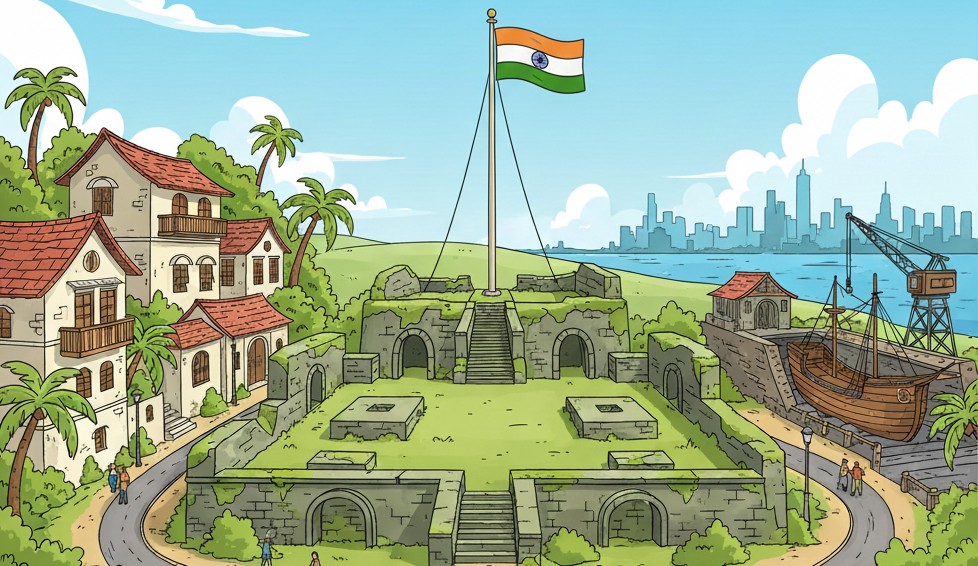
  • Remaining features today include stone platforms, retaining walls and traces of pathways that hint at its original layout.

Decline and Demolition

  • With the rise of Fort George and the expansion of fortified Bombay, Mazagaon Fort gradually lost military relevance.
  • Much of the structure was demolished during 19th-century urban development, especially as the Mazagon Dockyard grew.
  • The hill itself was reshaped over time, leaving only fragments of the earlier complex.

Present Condition and Visitor Experience

  • Today, the fort exists only as ruins and subtle markers, blending into the residential setting around Mazagaon Hill.
  • Visitors often explore the site through heritage walks, combining it with a visit to Matharpacady Village, a charming East Indian settlement with Indo-Portuguese wooden houses, old stairways and cultural lanes.
  • The ambience is quiet, non-touristy and ideal for history lovers, photographers and anyone appreciating Mumbai’s layered heritage.

Highlights for Visitors

  • Heritage walk through Matharpacady
  • Old stone remnants of the fort
  • Insights into Mumbai’s colonial defence system
  • Viewpoints and narrow lanes with old-world charm

Despite its faint physical presence, Mazagaon Fort remains an essential chapter in Mumbai’s evolution, symbolising a time when the city’s identity was shaped by maritime trade, colonial rivalry and the defence of strategic islands.


History

The history of Mazagaon Fort is deeply intertwined with the early colonial transformation of the Seven Islands of Bombay, making it one of the earliest fortified positions in what would later become modern Mumbai. Built originally by the Portuguese, the fort stood on Mazagaon Hill, a naturally elevated point that allowed its garrison to monitor incoming ships and control the eastern harbour. During the 16th and 17th centuries, Mazagaon was a thriving Portuguese settlement, and the fort served as both a defensive outpost and a symbol of their presence in the region.

When the British gained control of Bombay, the fort transitioned into a key asset for the British East India Company. The British recognised the strategic importance of Mazagaon’s height and reinforced the structure, integrating it into their growing network of coastal defences. During this period, Bombay was evolving rapidly due to maritime trade, and Mazagaon Fort helped protect the harbour from rival European powers and local threats.

As the British expanded their stronghold further south, especially with the development of Bombay Castle and later Fort George, the relevance of Mazagaon Fort diminished. By the 19th century, major urban development and the expansion of the Mazagon Dockyard led to the demolition of much of the hill’s older structures, including the fort.

  • Key Historical Highlights 📜
  • Built by the Portuguese during early colonial expansion
  • Reinforced by the British East India Company
  • Part of Bombay’s first ring of hilltop defences
  • Declined in importance with the rise of Fort George
  • Demolished largely during 19th-century expansion works
  • Now considered an "invisible fort" with minimal remains


Architecture and Design

The architecture and design of Mazagaon Fort reflect the layered colonial influences that shaped early Mumbai, beginning with the Portuguese and later strengthened by the British East India Company. Although the fort stands mostly in ruins today, heritage studies and remaining traces offer valuable clues about its original structure, layout and defensive purpose.

Mazagaon Fort was constructed on the natural elevation of Mazagaon Hill, which acted as a built-in defence feature. The height offered commanding views of the harbour, allowing the garrison to track ships approaching Bombay’s eastern waterfront. This strategic placement suggests that the fort was designed for surveillance and defence rather than heavy warfare.

The Portuguese typically used locally available basalt stone, and Mazagaon Fort appears to have followed this tradition. Its walls were likely thick and modestly high. The British may have reinforced the structure with additional stonework, platforms and parapets.

Today, what remains are subtle architectural traces scattered around the hill. Visitors can observe stone platforms, patches of retaining walls and stone steps that once connected different levels of the fort complex. These ruins blend with the natural slope of the hill.

Key Architectural Features 🧱

  • Built with locally available basalt stone
  • Positioned atop Mazagaon Hill for natural defence
  • Possible small bastions or parapets
  • Stone pathways and platforms still visible
  • Stairways and retaining walls indicate multi-level layout
  • Hybrid Portuguese-British military design

Even though its physical presence has faded, the architectural footprint of Mazagaon Fort continues to reveal how early fortifications influenced the evolution of Mumbai.

0214
Geography & Strategic Importance

The geography of Mazagaon Fort played a crucial role in its development as one of the earliest fortified points in colonial Mumbai. Perched on Mazagaon Hill, the fort occupied a naturally elevated outcrop that offered a commanding view of the eastern waterfront and maritime routes. This hill was one of the prominent high points among the Seven Islands of Bombay, making it ideal for a lookout post.

Mazagaon’s proximity to the harbour was its greatest advantage. During the Portuguese era, the fort allowed monitoring of approaching ships from the Arabian Sea. The British continued using this position before shifting their focus to Bombay Castle and Fort George.

The hill’s steep slopes acted as natural barriers, reducing the need for extensive walls. Remnants such as stone steps, elevated platforms and retaining walls still reflect how the fort blended with the hill’s terrain.

The landscape has changed over time due to the expansion of the Mazagon Dockyard, but the underlying elevation still offers clues about the fort’s strategic value.

Geographical & Strategic Highlights 🌍

  • Situated on the elevated Mazagaon Hill
  • Clear view of the eastern harbour
  • Natural defensive advantage from steep slopes
  • Key part of Portuguese and British defence systems
  • Ideal for monitoring maritime activity
  • Geography influenced both its design and decline


Geography & Strategic Importance

The geography of Mazagaon Fort played a crucial role in its development as one of the earliest fortified points in colonial Mumbai. Perched on Mazagaon Hill, the fort occupied a naturally elevated outcrop that offered a commanding view of the eastern waterfront and maritime routes. This hill was one of the prominent high points among the Seven Islands of Bombay, making it ideal for a lookout post.

Mazagaon’s proximity to the harbour was its greatest advantage. During the Portuguese era, the fort allowed monitoring of approaching ships from the Arabian Sea. The British continued using this position before shifting their focus to Bombay Castle and Fort George.

The hill’s steep slopes acted as natural barriers, reducing the need for extensive walls. Remnants such as stone steps, elevated platforms and retaining walls still reflect how the fort blended with the hill’s terrain.

The landscape has changed over time due to the expansion of the Mazagon Dockyard, but the underlying elevation still offers clues about the fort’s strategic value.

Geographical & Strategic Highlights 🌍

  • Situated on the elevated Mazagaon Hill
  • Clear view of the eastern harbour
  • Natural defensive advantage from steep slopes
  • Key part of Portuguese and British defence systems
  • Ideal for monitoring maritime activity
  • Geography influenced both its design and decline


Decline and Demolition

The decline of Mazagaon Fort was shaped by the rapid transformation of Mumbai during the British colonial period. Although the fort played an important role during the early phases of Portuguese and British rule, its relevance diminished as new military and commercial priorities emerged. The British East India Company shifted its focus towards southern Bombay, strengthening major fortifications such as Bombay Castle and later Fort George. As these larger centres grew in importance, hilltop forts like Mazagaon Fort became less significant.

During the 19th century, the establishment and expansion of the Mazagon Dockyard required large-scale land modification. Much of Mazagaon Hill was cut and reshaped, leading to the demolition or burial of the fort’s remaining structures.

The lack of official preservation further accelerated its disappearance. Today only traces such as stone platforms, retaining walls and pathway fragments remain.

Key Reasons for Decline and Demolition ⚒️

  • Rise of Bombay Castle and Fort George
  • Shift away from hilltop forts
  • 19th-century urban development and reclamation
  • Expansion of the Mazagon Dockyard
  • No official heritage protection
  • Erosion and integration into neighbourhoods
0514
Present Condition – What Remains Today

The present condition of Mazagaon Fort reflects its status as one of Mumbai’s least-visible historical sites, where only faint traces survive within modern residential surroundings. Unlike forts with intact walls, Mazagaon Fort exists today as subtle remnants scattered across Mazagaon Hill.

Visitors may encounter stone platforms, sections of retaining walls and old stone steps that once connected different levels of the fort. These remains lack official signage, so historical context is essential to interpret them. Decades of development have reshaped the hill, burying or removing parts of the original structure.

The nearby Matharpacady Village enhances the experience with its Indo-Portuguese homes, wooden balconies and heritage lanes. While the fort is visually modest, the cultural ambience around the hill preserves its memory.

What Visitors Can See Today 🏚️

  • Stone platforms forming parts of the fort base
  • Remnants of retaining walls along the slopes
  • Old stone steps and pathway fragments
  • Indo-Portuguese homes in Matharpacady Village
  • Subtle markers of the fort’s defensive role
  • Historic remnants blended with residential life

Despite minimal visible remains, Mazagaon Fort offers insights into early colonial defence and the evolution of Mumbai’s old neighbourhoods.


Heritage Neighbourhood – Matharpacady

The heritage neighbourhood of Matharpacady, located near the remnants of Mazagaon Fort, is one of the most atmospheric and culturally rich pockets of Mumbai. This East Indian settlement offers a rare glimpse into the city’s Indo-Portuguese past with its preserved architecture and old-world character.

Matharpacady is known for its distinctive wooden houses featuring carved balconies, sloping tiled roofs and pastel-coloured exteriors. These homes showcase a blend of Portuguese influence and traditional East Indian craftsmanship. Some structures are more than a hundred years old and remain occupied by local families.

The area includes Christian heritage sites such as shrines, chapels and community halls. Its peaceful lanes and cultural ambience complement the understated ruins of Mazagaon Fort.

Why Matharpacady is Special 🏘️

  • Indo-Portuguese wooden houses
  • Well-preserved heritage architecture
  • Strong East Indian cultural presence
  • Decorative balconies and vintage facades
  • Small chapels and community spaces
  • Quiet lanes ideal for heritage walks
  • Located next to Mazagaon Fort site

Matharpacady serves as a living cultural museum, enriching the story of Mazagaon Fort and offering visitors an immersive heritage experience.


Suggested Walking Trail

Exploring Mazagaon Fort and its surrounding heritage zone is best done on foot, allowing visitors to appreciate the subtle ruins and cultural character of Mazagaon Hill and Matharpacady Village.

Begin the walk near Dockyard Road Station. Move towards Mazagaon Hill to find early traces of the fort, including stone steps and platform-like remnants. These features hint at the defensive layers that once overlooked the eastern harbour.

Continue into Matharpacady Village, where Indo-Portuguese homes, colourful facades, wooden balconies and small shrines reflect East Indian heritage. This part of the walk is highly photogenic.

Proceed uphill along roads like Nadkarni Park Road or Matharpacady Hill Road for elevated viewpoints that reveal the hill’s historic significance.

Conclude the walk at Joseph Baptista Garden on Bhandarwada Hill for greenery and partial harbour views.

Suggested Walking Trail Highlights 🚶‍♂️

  • Start at Dockyard Road Station
  • Spot fort traces on Mazagaon Hill
  • See stone platforms, retaining walls and old steps
  • Wander through Matharpacady Village
  • Photograph vintage homes and shrines
  • Walk uphill for elevated views
  • End at Joseph Baptista Garden

This walking trail blends history, culture and daily life, helping visitors understand the understated charm of Mazagaon Fort.

0814
Key Highlights

Mazagaon Fort may not resemble large forts, but its historical depth and cultural surroundings make it a meaningful stop for those exploring old Mumbai. Its charm lies in its quiet ambience, layered past and combination of subtle ruins with the living heritage of Mazagaon Hill and Matharpacady Village.

One highlight is its dual colonial legacy. The fort was established by the Portuguese and later reinforced by the British East India Company. This duality is reflected in the settlement layout and hilltop pathways. The elevation of Mazagaon Hill once provided clear views of the harbour, making it strategically important.

The surrounding Matharpacady Village adds further richness with Indo-Portuguese wooden houses, decorative balconies and heritage shrines. Visitors enjoy photographing vintage doors, colourful facades and narrow lanes.

Remnants such as stone platforms, steps and retaining walls offer subtle insights into the fort’s earlier defensive structure.

Key Highlights of Mazagaon Fort 🔍

  • Early colonial fort fragments
  • Portuguese origin, British reinforcement
  • Hilltop placement on Mazagaon Hill
  • Heritage charm of Matharpacady Village
  • Photogenic Indo-Portuguese architecture
  • Quiet, non-touristy experience
  • Insight into early defence of the Seven Islands
  • Exploration of a living colonial-era neighbourhood

These highlights make Mazagaon Fort a compelling stop for heritage explorers seeking Mumbai’s lesser-known stories.


Best Time to Visit

The best time to visit Mazagaon Fort and the heritage lanes of Matharpacady depends on weather and walking comfort. Since the site requires outdoor exploration, gentle slopes and narrow lanes, pleasant weather enhances the experience.

The ideal season is October to February, when Mumbai enjoys cooler temperatures, lower humidity and clear air. These conditions are perfect for spotting fort remnants and photographing the pastel-coloured Indo-Portuguese houses of Matharpacady Village.

During the monsoon, the hill turns lush, but the stone steps can be slippery. Summer is the least comfortable due to heat and humidity, making early mornings or late afternoons preferable.

Best Time Recommendations ⏰

  • October to February – best walking weather
  • Monsoon – scenic but requires caution
  • Avoid peak summer afternoons
  • Morning (7–10 am) or late afternoon (4–6 pm)
  • Ideal for quiet heritage walks and photography

Choosing the right timing allows visitors to fully enjoy the subtle ruins and charming neighbourhood around Mazagaon Fort.


Tips & Hacks

Exploring Mazagaon Fort and the heritage lanes of Matharpacady becomes more enjoyable with a few practical tips. Since the site includes subtle ruins and residential areas, preparation enhances comfort and understanding.

Wear comfortable footwear because the trail involves uneven steps and narrow lanes. Light clothing suits Mumbai’s warm climate. As the ruins are unmarked, carrying basic historical notes or reference images helps in identifying stone platforms and wall remnants. Exploring with a local or joining a heritage walk adds depth.

Photography enthusiasts will appreciate the pastel houses and vintage details of Matharpacady Village. Morning or late-afternoon lighting works best. Carry water as the area lacks tourist facilities.

Useful Tips & Hacks ✔️

  • Wear comfortable shoes
  • Carry reference images or notes
  • Visit early morning or late afternoon
  • Carry drinking water
  • Be careful on slippery monsoon paths
  • Avoid photographing residents without permission
  • Keep noise low in residential lanes
  • Join a heritage walk for deeper context
  • Combine the visit with nearby attractions

These simple tips help visitors appreciate both the subtle ruins and the cultural atmosphere surrounding Mazagaon Fort.

01114
HOW TO REACH 🚌🚇

Reaching Mazagaon Fort is easy as it lies close to major transport routes around Dockyard Road in Mumbai. The fort’s remnants are accessible after a short walk through the lanes of Mazagaon Hill and Matharpacady Village.

By Train (🚆 Local Railway)
The nearest station is Dockyard Road Station on the Harbour Line. Local train fares are typically ₹5–₹15. A short 5–7 minute walk leads to Mazagaon Hill.

By Metro (🚇)
There is no direct metro access. Travellers must switch to trains, buses or taxis from CST or nearby metro-linked areas.

By Bus (🚌 BEST Services)
BEST buses connecting CST, Byculla, Pydhonie and Colaba pass through Mazagaon. Average fare: ₹10–₹25.

By Road / Taxi / Auto (🚗)
Taxis and app-based rides can drop visitors near Matharpacady or Mazagaon Hill Road. Fares range between ₹70–₹200 depending on distance. A short walk is required due to narrow lanes.

By Ferry (⛴️) While no ferry reaches Mazagaon directly, Bhaucha Dhakka is nearby. From there, take an auto or taxi.

Tips for Smooth Travel ✔️

  • Parking is limited in Matharpacady
  • Best to arrive via Dockyard Road Station
  • Walk during early morning or late afternoon
  • Narrow lanes require short walking distances

Travelling via train or taxi followed by a brief walk is the most convenient way to reach Mazagaon Fort.


Food Courts / Food Options Nearby

If you’re visiting Mazagaon Fort and Matharpacady Village, here are nearby food options ranging from quick snacks to casual dining:

  • Local Sandwich Stalls (Dockyard Road Station) – Quick bite, approx. ₹150–₹250, ideal before or after your heritage walk.
  • Pine Restaurant – North Indian / Chinese meals, approx. ₹400 for two. Popular for butter chicken, fried rice, Hakka noodles.
  • Afzal’s Mao Family Restaurant – Mid-range dining, approx. ₹550–₹700 for two. Offers multi-cuisine options.
  • Mao Chinese Garden – Pan-Asian / Chinese dishes, open late, approx. ₹600 for two.

Tips: Carry water, visit early or late to avoid peak traffic, and enjoy the authentic local flavours. Most options are residential-friendly and budget-conscious.

Budget / Mood Where / What Approx. Cost Cuisine / Food Type
Quick Snack / Light Meal Sandwich stalls near Dockyard Road ₹150–₹250 for two Sandwiches, snacks, light fast food
Casual Dining / Budget Meal Pine Restaurant ₹400 for two North Indian / Chinese / Indian staples
Mid-Range Restaurant Meal Afzal’s Mao Family Restaurant, Mao Chinese Garden ₹550–₹700 for two Indian / Chinese / multi-cuisine dishes

Recommended Dishes & Tips: Butter chicken, fried rice, Hakka noodles, and local snacks are popular. Evening meals work well post-walk, with some restaurants open until midnight.

01314
Heritage Walk & Food Trail (Itinerary)

This curated walking itinerary blends the subtle ruins of Mazagaon Fort with the heritage lanes of Matharpacady Village and nearby food stops, ideal for a half-day heritage + foodie experience in Mumbai.

Start: Dockyard Road Railway Station (🚆)

  • Arrive early morning (7:30–8:30 am) for pleasant weather.
  • Optional quick snack at local sandwich stalls near Dockyard Road Station (₹150–₹250).
  • Begin the walk towards Mazagaon Hill to explore fort remnants.

Stop 1: Mazagaon Fort Ruins (🏚️)

  • Explore stone platforms, retaining walls, and old steps hinting at the original fort layout.
  • Photography opportunities and views of the eastern harbour.
  • Time: 20–30 minutes.

Stop 2: Matharpacady Village (🏘️)

  • Discover Indo-Portuguese wooden homes, pastel facades, carved balconies, and small shrines.
  • Quiet heritage lanes perfect for slow-paced exploration and photography.
  • Time: 40–50 minutes.

Stop 3: Elevated Pathways / Mazagaon Hill Roads (⛰️)

  • Walk along Nadkarni Park Road or Matharpacady Hill Road for gentle uphill views.
  • Optional short rest and photography.
  • Time: 15–20 minutes.

Stop 4: Food Break / Lunch (🍽️)

  • Pine Restaurant – Quick North Indian / Chinese meal, approx. ₹400 for two.
  • Afzal’s Mao Family Restaurant – Mid-range multi-cuisine meal, approx. ₹550–₹700 for two.
  • Local sandwich stalls – Quick bite, ₹150–₹250.
  • Recommended timing: 11:00 am–12:30 pm, depending on pace.

Stop 5 (Optional): Joseph Baptista Garden / Bhandarwada Hill (🌳)

  • Conclude the walk at this garden for greenery, benches, and partial harbour views.
  • Relax, photograph, or enjoy the heritage ambience.
  • Time: 15–20 minutes.

Tips for the Trail

  • Wear comfortable shoes and carry water.
  • Visit post-monsoon to winter (Oct–Feb) for the best weather.
  • Bring a phone/camera fully charged for photography.
  • Respect residents’ privacy in Matharpacady Village.

This itinerary combines history, culture, photography, and local cuisine for a memorable heritage walk around Mazagaon Fort and Matharpacady Village.

2658


Places Nearby Mazagaon Fort
Frequently Asked Questions
Q1: What is the history of Mazagaon Fort in Mumbai?
A1: Mazagaon Fort in Mumbai was originally built by the Portuguese on Mazagaon Hill to guard the eastern harbour. Later, the British East India Company reinforced it as part of Bombay’s early colonial defence system. Most of the fort was demolished in the 19th century, leaving only subtle stone platforms and retaining walls today.
Q2: What remains of Mazagaon Fort can visitors see today?
A2: Today, visitors to Mazagaon Fort can see scattered stone platforms, old steps, retaining walls, and subtle ruins across Mazagaon Hill. The site blends into residential surroundings, and the heritage lanes of Matharpacady Village nearby complement the visit.
Q3: Is Mazagaon Fort open to the public for visiting?
A3: Yes, Mazagaon Fort is accessible to the public. There is no formal entry gate or ticket, as it exists as open ruins integrated into the neighbourhood. Visitors can explore the area freely while respecting local residents.
Q4: What is the best time to visit Mazagaon Fort in Mumbai?
A4: The best time to visit Mazagaon Fort is between October and February when the weather in Mumbai is cooler and more comfortable for walking. Early mornings and late afternoons provide the best light for photography and exploration.
Q5: How do I reach Mazagaon Fort using public transport?
A5: The most convenient way to reach Mazagaon Fort is via Dockyard Road Station on the Harbour Line. BEST buses and taxis from CST, Byculla, or Colaba are also options. From the station, it is a 5–7 minute walk to Mazagaon Hill.
Q6: Are there guided tours available for Mazagaon Fort?
A6: There are no formal guided tours at Mazagaon Fort, but heritage walk groups occasionally include the fort and Matharpacady Village in their itineraries. Local guides can provide historical context for the subtle ruins.
Q7: Can I take photographs at Mazagaon Fort?
A7: Yes, photography is allowed at Mazagaon Fort and in Matharpacady Village. Visitors are advised to be respectful and avoid photographing residents without permission, as the area is residential.
Q8: Are there any food options near Mazagaon Fort?
A8: Yes, nearby options include local sandwich stalls near Dockyard Road Station for quick snacks, Pine Restaurant for North Indian and Chinese meals, and Afzal’s Mao Family Restaurant for mid-range dining. Prices range from ₹150 to ₹700 for two people depending on the choice.
Q9: Is Mazagaon Fort safe for families and children?
A9: Yes, Mazagaon Fort is generally safe for families. However, caution is advised on uneven stone steps, platforms and sloped areas, especially during the monsoon when surfaces may be slippery.
Q10: How long does it take to explore Mazagaon Fort and Matharpacady Village?
A10: A typical visit to Mazagaon Fort and the heritage lanes of Matharpacady Village takes approximately 1.5 to 2 hours, depending on walking pace, photography and time spent observing architectural details.
Q11: Are there any nearby attractions I can visit after Mazagaon Fort?
A11: Yes, nearby attractions include Joseph Baptista Garden, Bhaucha Dhakka ferry terminal, Sewri Fort, and the dockyard heritage areas. These can complement a heritage walk around Mazagaon Hill.
Q12: Does Mazagaon Fort have any official entry fee?
A12: No, Mazagaon Fort has no official entry fee. Visitors can freely explore the ruins and surrounding neighbourhood without purchasing tickets.
Q13: What kind of footwear is recommended for visiting Mazagaon Fort?
A13: Comfortable walking shoes or sneakers are recommended for Mazagaon Fort, as the area includes uneven stone steps, sloped pathways, and narrow heritage lanes.
Q14: Can I combine a visit to Mazagaon Fort with other forts in Mumbai?
A14: Yes, Mazagaon Fort can be combined with nearby historical sites like Sewri Fort, Dongri Fort, and heritage walks through South Mumbai to explore multiple colonial-era forts in one trip.
Q15: Why is Mazagaon Fort called an “invisible fort”?
A15: Mazagaon Fort is called an “invisible fort” because very little of its original structure remains. Most walls, bastions and buildings were demolished during 19th-century urban development, leaving only faint traces and platforms amid residential areas.